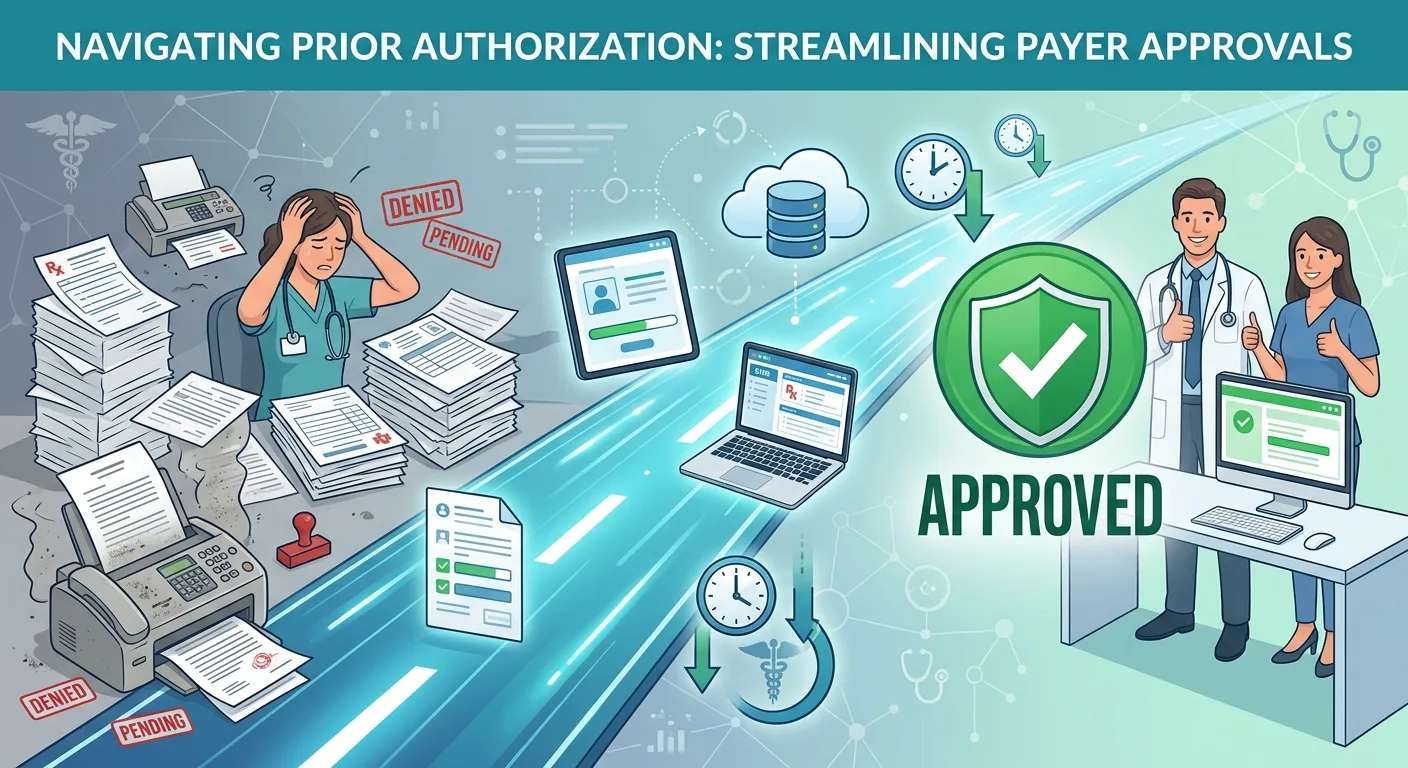
In today's complex healthcare landscape, Prior Authorization (PA) remains one of the most persistent bottlenecks for medical practices, health systems, and patients alike. Designed initially as a utilization management tool to control medical costs and ensure treatments meet evidence-based criteria, PA has increasingly evolved into a heavy administrative burden.
Delayed care, burned-out clinical staff, and lost revenue are often the byproduct of tedious approval processes. However, healthcare organizations can transform this friction point into a streamlined, efficient workflow with the right blend of technology, process optimization, and proactive payer alignment.
The Pain Points in Modern Prior Authorization
Understanding how to solve the prior authorization dilemma requires analyzing where the breakdown occurs. The root causes of delays generally stem from four core challenges:
- Fragmented Payer Guidelines: Every insurance payer operates with unique clinical documentation standards, policies, and portal interfaces.
- Manual Workflows: Phone calls, faxes, and manual data entry into disconnected portals consume hundreds of administrative hours.
- Incomplete Clinical Submissions: Missing chart notes, lack of step-therapy proof, or incomplete forms lead to immediate denials or requests for additional information (RFIs).
- Communication Silos: Limited visibility between provider offices, pharmacies, and payer authorization departments leads to redundant follow-ups and patient frustration.
5 Strategic Pillars to Accelerate Approvals
1. Transition to Electronic Prior Authorization (ePA)
Moving away from paper faxes and separate portal logins is the single most impactful step an organization can take. Modern Electronic Health Record (EHR) platforms support integrated Electronic Prior Authorization (ePA) standards (such as NCPDP and HL7 FHIR standards). Integrating ePA directly into the clinician’s prescribing workflow allows authorization requests to trigger automatically at the point of care, surfacing payer rules instantly.
2. Build Standardized Pre-Submission Checklists
Incomplete initial submissions are a primary driver of approval delays. Creating payer-specific and procedure-specific checklists ensures that administrative staff attach all necessary medical records—such as lab results, conservative treatment history, diagnostic imaging, and physician notes—on the first attempt.
Pro Tip: First-Time Clean Submission Rate
Track your practice’s First-Time Clean Submission Rate. Raising this metric above 90% drastically reduces peer-to-peer review requests and cuts authorization turnaround times in half.
3. Establish Dedicated PA Specialists
While clinical staff should drive patient care, leaving complex payer negotiations to nurses or front-desk staff often reduces overall practice efficiency. Centralizing authorization management with a dedicated team of PA specialists or leveraging specialized Revenue Cycle Management (RCM) partners ensures that rules are mastered, changes in payer criteria are tracked proactively, and peer-to-peer reviews are scheduled swiftly.
4. Leverage Data Analytics and Predictive Tracking
Analyze past approval data to anticipate delays before they occur. By tracking authorization metrics by payer, CPT/HCPCS code, and rendering provider, practices can:
- Identify payers with exceptionally long turnaround times (TAT).
- Pinpoint recurring denial reasons and adjust documentation strategies ahead of time.
- Set clear, realistic timeline expectations with patients prior to scheduled procedures.
5. Implement AI-Driven Clinical Rule Engine Automation
Artificial intelligence and machine learning tools are rapidly transforming utilization management. Advanced AI engines can scan clinical charts within the EHR, extract required clinical justifications, pre-populate PA requests, and cross-reference current payer policies in real time—drastically reducing human error and manual data entry.
Preparing for Regulatory Reform
Regulatory changes from governing bodies like the Centers for Medicare & Medicaid Services (CMS) are pushing payers toward faster turnaround mandates and mandatory API implementations for electronic prior authorization. Staying compliant with upcoming state and federal transparency standards will require healthcare organizations to modernize their administrative infrastructure today.
Conclusion: Turning Friction into Patient Satisfaction
Prior authorization doesn't have to be an insurmountable obstacle to quality healthcare. By leveraging modern ePA technology, standardizing clinical documentation practices, and building specialized administrative workflows, healthcare providers can drastically reduce approval cycle times.
Ultimately, streamlining payer approvals isn't just about administrative efficiency—it’s about delivering timely, uninterrupted care to the patients who need it most.